SEE
Fuse 4K, ICG and procedural signals into a live understanding of the surgical field.
 UNIVLABS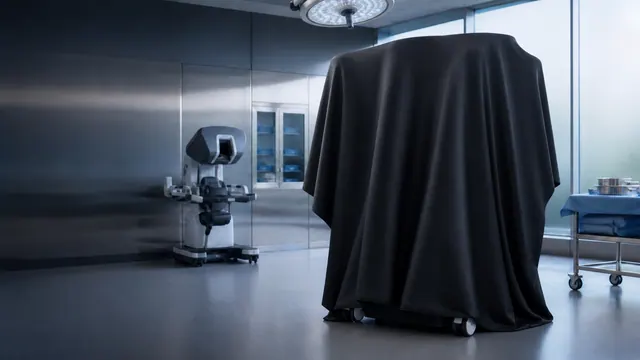
SURGIBOT
UNDER DEVELOPMENT · PHASE 2 AUTONOMY TARGET: 2035We are developing a surgeon-controlled robotic platform first, with a second phase targeting defined autonomous capabilities by 2035. Neither phase is currently a clinically available product.
SEE HOW IT LEARNSSurgiBot is conceived as a multi-arm surgical robot: articulated instrument arms, surgeon-grade vision and a compact operating-room platform. The development programme aims to learn from governed surgical data and progress from surgeon-controlled assistance toward bounded autonomous action.
Fuse 4K, ICG and procedural signals into a live understanding of the surgical field.
Recognise anatomy, instruments, workflow stage and safety boundaries.
Select a validated sequence of movements for a defined surgical task.
Execute precise motion with continuous monitoring and human override.
SURGIBOT / SRS PRODUCT SPECIFICATIONS
A four-arm, surgeon-controlled surgical robot with force feedback, stereo vision and on-device intelligence. The SRS defines the engineering targets for the system under development.
UNDER DEVELOPMENT · ENGINEERING TARGETS
These are planned specifications, not measured or clinically validated performance. Safety standards are design requirements, not certifications. Autonomy and remote operation require further validation and applicable regulatory authorisation.
Three instrument arms and one camera arm, with wristed instruments and provision for a fifth-arm bracket.
Fibre Bragg grating (FBG) sensing in the instrument shaft, targeting force resolution below 0.1 N at the tip.
Stereo 3D imaging with integrated near-infrared / ICG fluorescence and a target of 60–120 frames per second.
On-device tissue segmentation, targeting at least 90% mean intersection-over-union (mIoU) with a 30 fps overlay.
A 7-DOF wristed instrument range in 8 mm and 5 mm formats, targeting at least 50 sterilisation cycles.
Phase 2 targets defined autonomous capabilities by 2035, with surgeon oversight and an independent safety processor; subject to validation and approvals.
| Component | Height | Width × depth | Base footprint | Weight |
|---|---|---|---|---|
| Surgeon console | 130–195 cm | 85 × 100 cm | ≈ 0.85 m² | ≤ 250 kg |
| Patient cart | 150–230 cm | 90 × 125 cm | ≈ 1.13 m² | ≤ 550 kg |
| Vision tower | 180–225 cm | 80 × 90 cm | ≈ 0.72 m² | ≤ 350 kg |
Patient-cart deployed length: 170–225 cm. Ground clearance: ≥ 32 mm. Combined system weight: approximately 1,150 kg. Doorway clearance target: ≥ 200 cm high × 100 cm wide. Elevator capacity target: ≥ 750 kg for component transport; site-specific handling requirements must be confirmed.
Source: SRS Robotics product specification and dimensions workbook. Final specifications remain subject to engineering verification.
The planned learning pathway starts with authorised surgical recordings. Governed data preparation, model research, simulation and controlled studies would follow. Any robotic capability must be separately validated before clinical use.
SurgiBot's development programme targets learning from a governed corpus representing up to 80 million surgeries, subject to lawful access, consent, data rights, quality controls and applicable regulatory requirements.
Each validated deployment can return governed performance data to improve the system.
Phase 1 is a surgeon-controlled robotic platform, currently under development. Phase 2 targets defined autonomous capabilities by 2035—not unrestricted autonomous surgery.
Robotic instruments, stereo vision, force feedback and surgeon override. Availability depends on verification, clinical evidence and applicable approvals.
Supervised, bounded tasks developed through simulation and controlled validation. A target date is not a product launch or clinical-use commitment.
Systematic visual survey, landmark recognition and documentation.
Stable visualisation and coordinated instrument positioning.
Exposure, anatomy recognition and selected standardised steps.
Identification, controlled dissection, camera control and selected repeatable steps under specialist supervision.
The Phase 2 target of 2035 is a development ambition, not a clinical promise. Scope and timing will depend on engineering validation, clinical evidence, ethics review, regulatory authorisation, patient selection and human oversight.
SurgiBot will advance through supervised task autonomy before any consideration of broader procedural autonomy.
DISCUSS SURGIBOT